
March 2018: University of Miami School of Business
Opiates – A Public Health Emergency
Select a community and identify the extent to which the opioid epidemic exists, and create an
1st place: University of Minnesota, Carlson School of Management
Elisha Friesema, Stephen Palmquist and Prachi Bawaskar
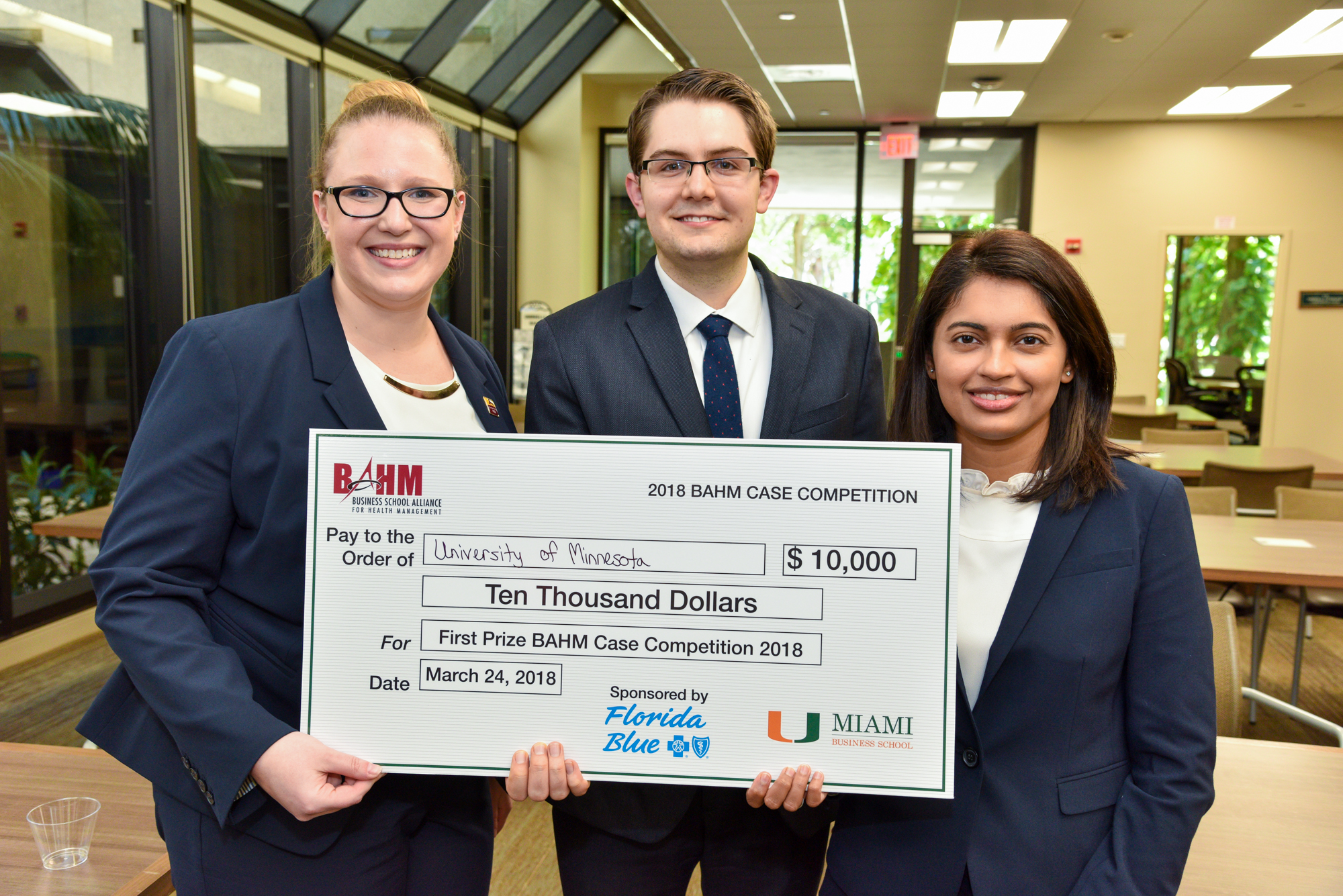
Elisha Friesema, Stephen Palmquist and Prachi Bawaskar Medical Industry Leadership Institute, Carlson School of Management
The winning team presented their solution, modeled after Cure Violence, a program designed to combat violence in Chicago, before university leaders, state health officials, and state policy makers, including Minneapolis’s mayor and Minnesota’s governor. News pieces followed, including a TV segment and an article in the Minnesota Daily. A major insurer asked the team to speak with a startup it has invested in, and a healthcare delivery company may incorporate the model into its substance abuse treatment protocols. The case was also published in BAHM’s journal, Health Management, Policy and Innovation (HMPI).
2nd place: UNC Kenan-Flagler Business School
Monica Parakh, Derek Schujahn and Chloe Hoeppner
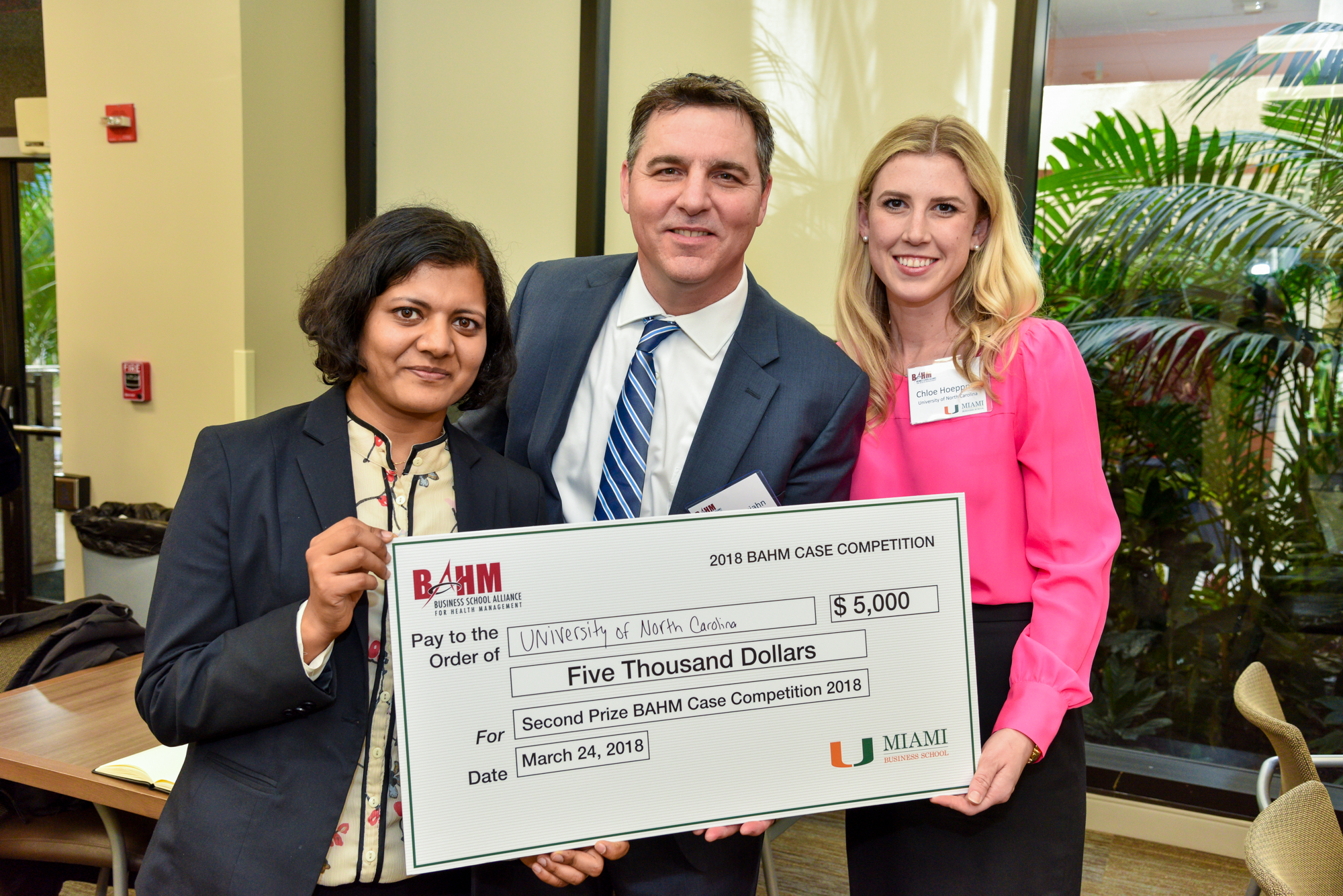
Monica Parakh, Derek Schujahn and Chloe Hoeppner UNC Kenan-Flagler Business School
3rd place: Rotman School of Management, University of Toronto
Andrea Lo, Jay Toor and Melitta Cha
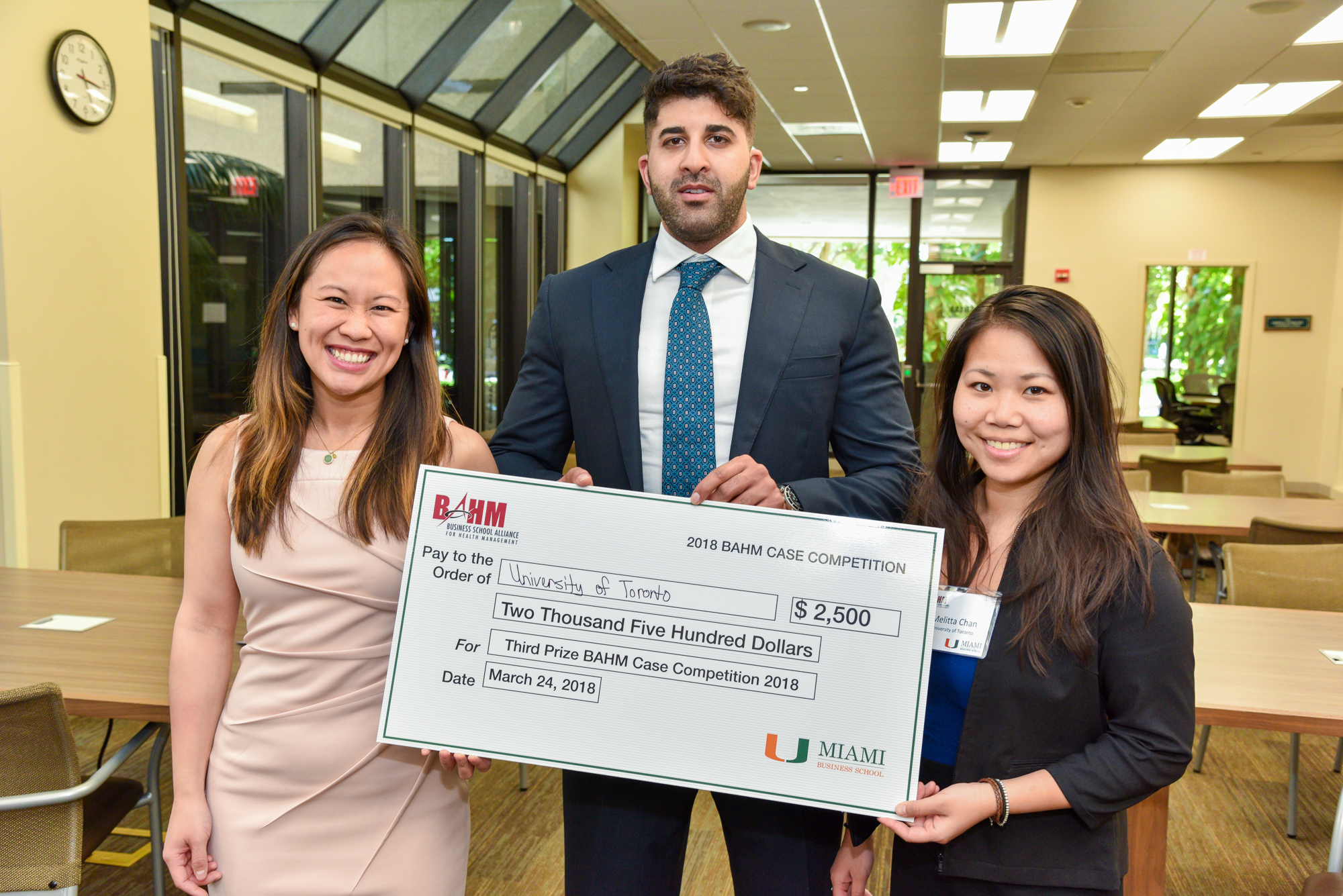
Andrea Lo, Jay Toor and Melitta Chan Rotman School of Management, University of Toronto
View the cases
(accessible only to BAHM Community members)
March 2017: Haas School of Business, University of California Berkeley
President-elect Trump & The Future of Healthcare Reform
Prepare a case study on a for-profit or not-for-profit health system, integrated delivery network (IDN) or health insurer and how it plans to strategically respond to the potential to “repeal and replace” Obamacare and Medicare.
1st place: Harvard Business School
Jonathan Friedlander, Tina Liu, & Michael Lefferts
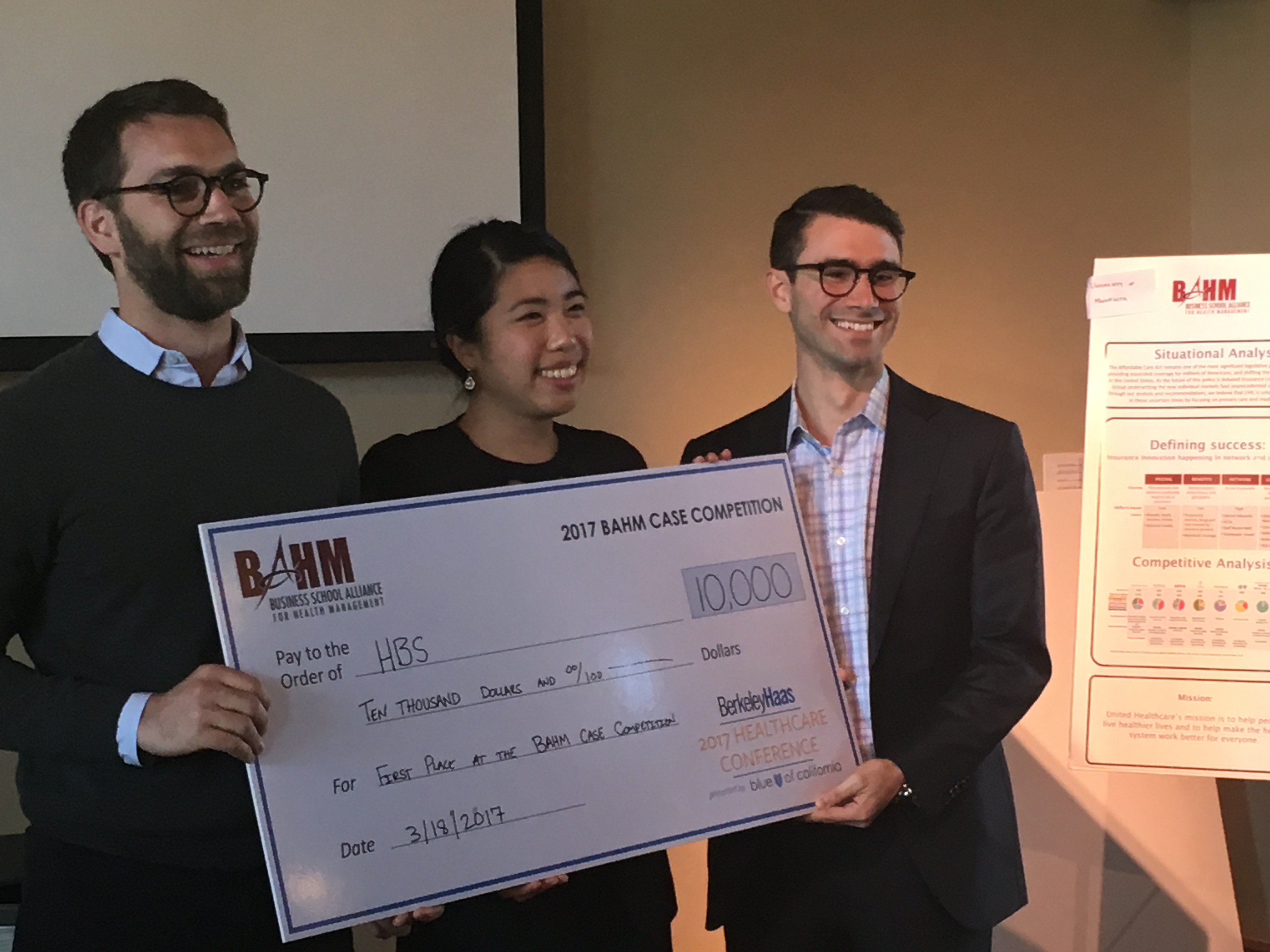
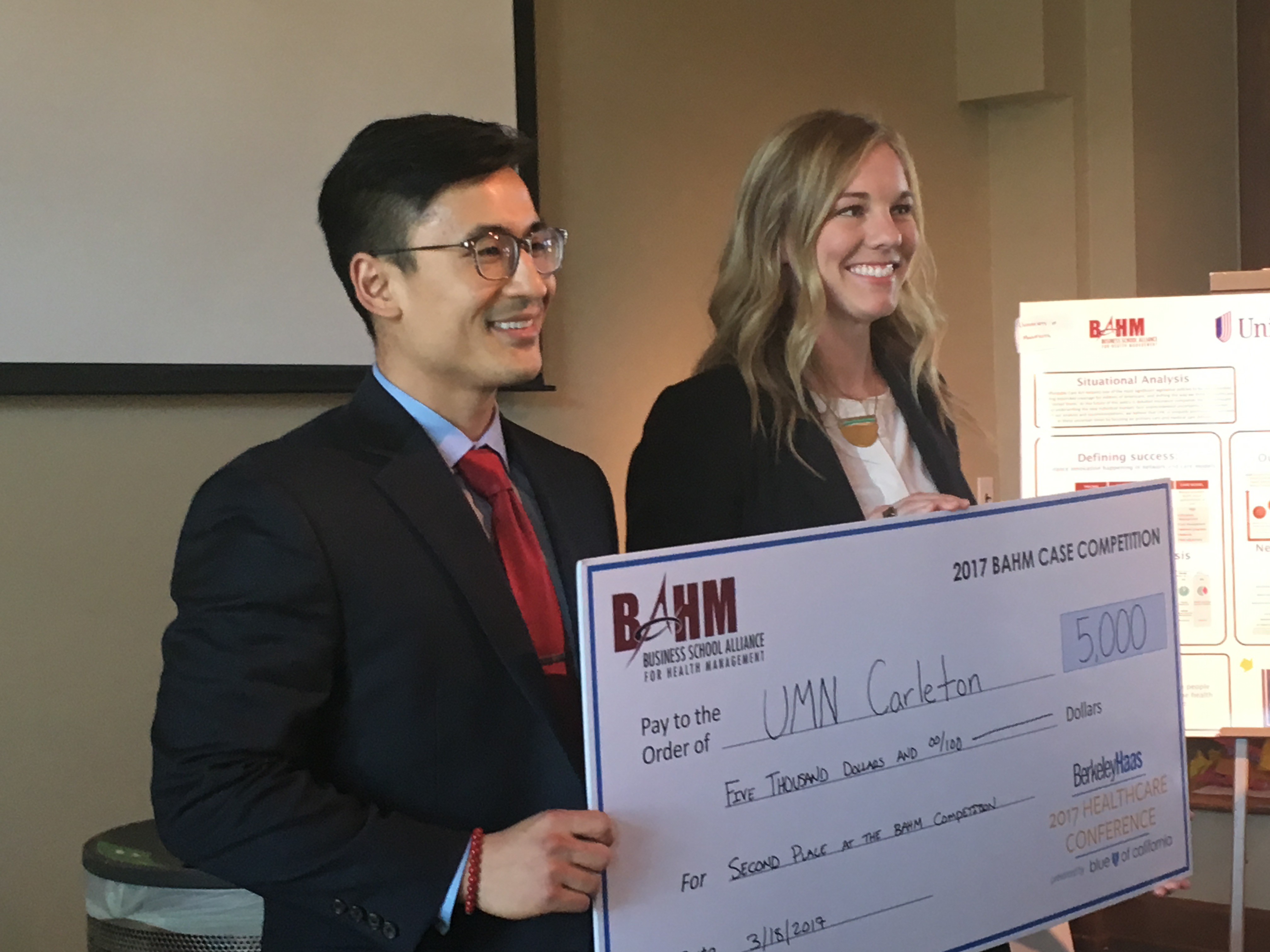
2nd place: Carlson School of Management, University of Minnesota
Alex Feng & Heidi Dickson
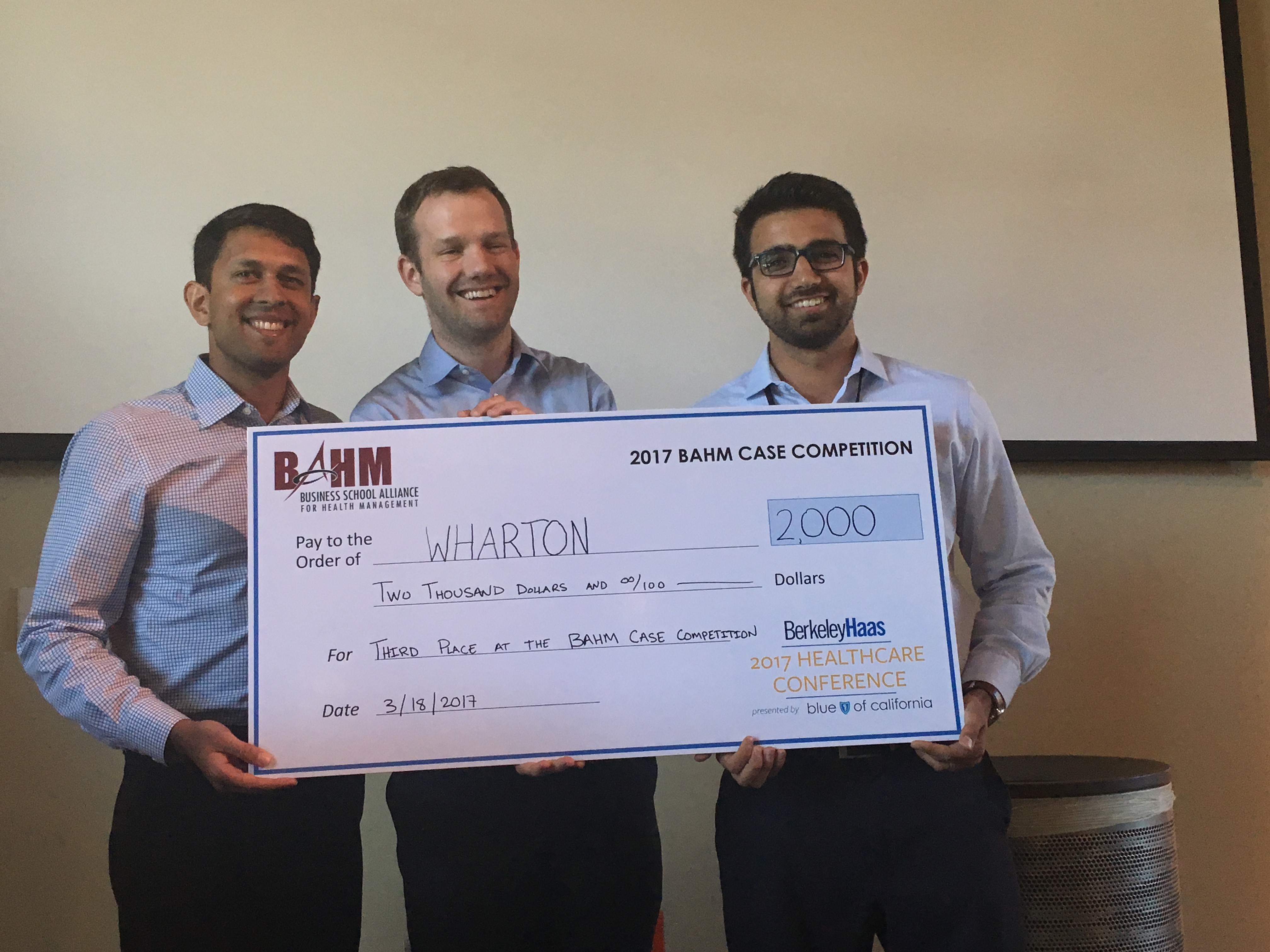
3rd place: Wharton School, University of Pennsylvania
Vikram Dashputre, Matthew McLaughlin, & Siddharth Damania
View the cases
(accessible only to BAHM Community members)
April 2016: Carlson School of Management, University of Minnesota
Early-Stage Medical Technology Innovations
Business analysis of an early stage industry innovation (defined as a medical device, a pharmaceutical, or an information technology) and its prospect in the market.
1st place: University of Minnesota, Carlson School of Management
MBA students Dane Stimart, Nic Milliron, Mark Mulvahill
2nd place: Georgia State University, Robinson College of Business
A.J. Hobbs, Lan Nguyen, Taylor Rawson
3rd place: Vanderbilt University, Owen Graduate School of Management
Meghan Mouser, Jacob Konitzer, Mark Fergason
View the cases
(accessible only to BAHM Community members)
April 2014: Vanderbilt Owen Business School
Creating Real Value from Health Care Information
Creating sustainable, measurable increases in healthcare utilizing existing or proposed Healthcare information Technology/analytic approaches.
1st place: University of Minnestota, Carlson School of Management
Bryana Mayer (’15 MBA), Tarun Jain (’15 MBA), and Svetlana Sandberg (’15 MBA)
View the cases
(accessible only to BAHM Community members)
April 2013: Harvard Business School
Entrepreneurship in Global Health Competition
Focus on the core strategy of a chosen organization, either already established or a start‐up concept, to address an unmethealth need, underserved community, or the development of novel technologies for global health markets.
First Place: Haas School of Business, University of California, Berkeley
Katrin Cox, Priya Mehta, and Annie Murphy
Second Place: Carlson School of Management, University of Minnesota
Jennifer Cutshall, Hilary Johnson, and Marissa Szody
Third place: (tie): The Wharton School, University of Pennsylvania
Casey Dougan and Tommy Fu
Owen Graduate School of Management, Vanderbilt University
Hillary Carroll, Jennifer Pasteris, and Cole Wheeler
View the cases
(accessible only to BAHM Community members)
November 2011: Fuqua School of Business at Duke University
Alzheimer’s and Brain Health Competition
Development of a strategy for Takeda to optimize the launch of a new indication of pioglitazone as a preventive treatment against Alzheimer’s disease in the United States. A panel of judges from Takeda evaluated teams on their strategic thinking, creativity, strength of the analysis, customization of the recommendation to Takeda’s needs and vision, and presentation skills.
First Place: University of Pennsylvania, Wharton
Second Place: Duke University, Fuqua
Third Place: Boston University School of Management
March 2011: Northwestern’s Kellogg School of Management
Health Services Business Plan Competition
Focus on a strategic issue relating to the sponsor (DaVita’s) business (kidney disease and the dialysis industry).
First place: University of Pennsylvania, Wharton
Jonathan McEuen